

 EN
EN





Tired & Aching Feet: Causes & Solutions

Your feet carry you through everything: every commute, every shift, every errand. And yet, for millions of people, tired and aching feet are simply part of the day. They shouldn’t be. Your feet absorb thousands of impacts every single day, and when they’re not properly supported, fatigue builds fast. Whether your feet feel heavy by lunchtime or aching by the time you get home, this post covers what’s causing it, how to find quick relief and how to prevent it in the long term.
Why Do My Feet Feel Tired and Achy?
Foot fatigue rarely has one single cause. More often, it’s the result of several factors working against your feet at the same time. Understanding what’s behind the aching is the first step to doing something about it.
Prolonged standing or walking on hard surfaces
Concrete, tile, hardwood: hard floors are unforgiving. With every step, the impact travels straight into your heel and forefoot, and over the course of a long day, that compression adds up. Nurses, teachers, retail and hospitality staff know this only too well. By the end of a shift, feet don’t just ache. They throb. The problem isn’t the standing itself, it’s the lack of adequate cushioning between your foot and the floor.
Poor footwear and lack of cushioning
Most shoes are designed with style or everyday convenience in mind, not foot health. Thin soles offer virtually no shock absorption. High heels shift your entire body weight onto the forefoot. Flat shoes with no support leave your arch to fend for itself. The result is that your feet are absorbing the full impact of the ground surface and your body weight at once. With no foot support and weak foot muscles, your feet will feel it by the end of the day.
Many people focus on their shoes and overlook their socks entirely. Thin, unsupportive socks add no cushioning at the heel and forefoot, allowing more impact to travel through to the bones and soft tissue with every step. Over time, this contributes to the kind of foot tiredness that builds quietly throughout the day, often without the wearer making the connection.
Weak foot arches and muscle fatigue
Your foot’s arch acts as a natural shock absorber. Flat arches or a spreading forefoot are common in people who spend a lot of time on their feet, and they mean the shock-absorbing muscles tire out more quickly. Once those muscles tire, every step sends more stress into the joints and soft tissues of the foot.
Age-related changes in foot structure
As we age, the fatty tissue pads that cushion the heel and forefoot naturally thin out. This is one of the lesser-known contributors to foot pain, but it’s significant: less natural padding means more direct impact on the bones and tendons with every stride. It’s a gradual change, but one that means good cushioning matters more and more
Underlying foot conditions
For some people, an underlying condition makes the fatigue significantly worse. Plantar fasciitis, heel spurs, bunions, metatarsalgia and Morton’s neuroma can all exacerbate foot fatigue, and are often aggravated by the same factors that cause it. If you suspect any of these conditions may be contributing to your foot pain, visit our foot conditions hub for more detail on each.
How to Relieve Tired, Aching Feet
Relief doesn’t have to be complicated. There are practical steps you can take right now for immediate comfort, and smarter habits that prevent fatigue from building in the first place.
Rest and elevation
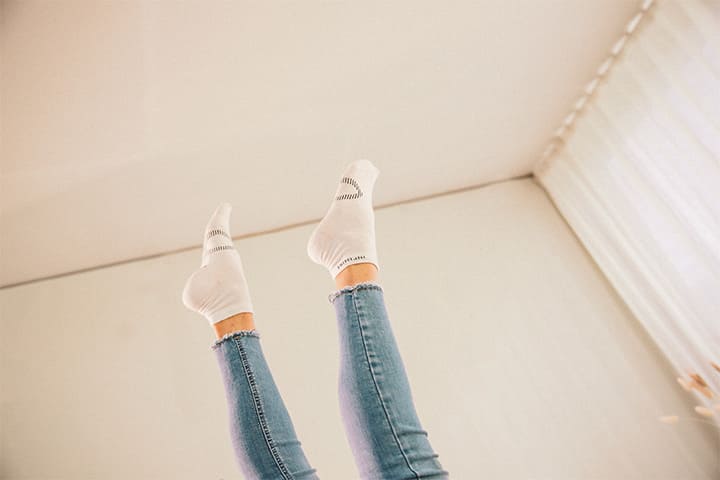
The simplest fix: sit down, put your feet up. Elevating your feet above heart level after a long day helps reduce swelling, encourages blood to flow back towards the heart, and gives your overworked muscles a chance to recover. Even 15–20 minutes makes a noticeable difference.
Foot stretches and exercises
Targeted movement helps with both recovery and long-term strength. A few exercises worth adding to your routine:
Plantar fascia stretch: Sit down, cross one foot over your knee, and gently pull your toes back towards your shin. Hold for 20–30 seconds. Repeat a few times on each side.
Toe curls: Place a small towel on the floor and use your toes to scrunch it towards you. Simple but effective for strengthening the small muscles of the foot.
Heel raises:Standing with feet hip-width apart, slowly rise onto your toes, hold for a moment, then lower back down. Builds calf strength and supports the arch.
Cold or warm foot soaks
Both work, for different purposes. Warm water helps muscles relax and can ease the aching after a long day. Cold water (or an ice pack wrapped in a cloth) reduces inflammation and swelling, particularly useful after time on hard floors or if your feet feel hot and puffy. Alternating between the two can be particularly effective.
Choosing the right footwear
Shoes matter, but so does what’s inside them. A shoe with a structured sole and decent arch support is a good start, but even well-made shoes can fall short when it comes to cushioning the specific pressure points where fatigue builds: the heel and forefoot. That’s where your socks come in.
The Role of Supportive Socks in Preventing Foot Fatigue
Most people accept tired, aching feet as an inevitable part of a busy day. They reach for insoles, or simply push through. But traditional solutions have their limitations: orthotics can be bulky, don’t fit in every shoe and often require a prescription. Standard insoles flatten over time, cannot be machine washed and have no compression technology for arch support or foot alignment.
There’s a smarter approach. One that works with any shoe in your cupboard.
What to look for in a supportive sock
Not all socks are created equal. If you’re looking for genuine support rather than just comfort, these are the features that matter:
Heel cushioning: absorbs impact where pressure is greatest with each step. Look for integrated cushions made from durable soft materials and not just textile weaves.
Forefoot support: protects the metatarsal bones during push-off, particularly important for those with splayfoot, metatarsalgia or bunions.
Arch compression: a structured midfoot sling that guides the foot bones into a natural, aligned position rather than letting the arch splay under load.
Breathable, skin-friendly materials: because support you find uncomfortable is support you simply won’t wear.
How INFINIRI socks tackle tired feet
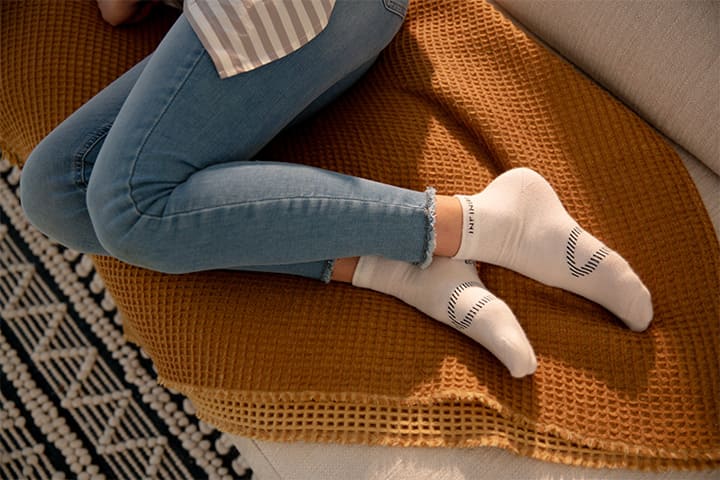
Here’s what’s built into every pair:
Medical-grade silicone heel pad (3mm): cushions every step, protecting the heel from the cumulative stress of hard floors.
Forefoot and splayfoot pad (2.5mm / 7.5mm): supports the metatarsal bones and arch during push-off, reducing forefoot pressure and fatigue while walking and standing.
Compression sling around the midfoot: gently guides the foot bones into their natural position, reducing strain on ligaments and soft tissue throughout the day. .
Organic cotton textiles: skin-friendly, sustainable and breathable for all-day wear.
Compatible with any shoe: business, casual, sports, ski boots. No compromises with what you wear.
Developed by orthopaedic professionals in Switzerland; manufactured in Europe.
The difference isn’t theoretical. Dave Andreoli, physiotherapist, puts it plainly: “Over half of my patients experience relief from foot pain and significant improvement in daily activities by wearing INFINIRI health socks.” And Dr. Uschi Holz notes: “Regularly wearing these health socks during exercise can prevent strain and foot pain.”
This is the gap that INFINIRI fills: for everyone who wants to move freely through their day without their feet holding them back.
When Should You See a Doctor About Foot Pain?
Supportive socks and lifestyle adjustments often go a long way, but some situations need professional attention. See a doctor or podiatrist if:
- Your foot pain is severe, persistent or getting worse
- The pain is accompanied by swelling, numbness, tingling or discolouration
- You suspect an underlying condition such as plantar fasciitis, heel spurs or a stress fracture
INFINIRI socks are a complementary measure designed to support healthy feet and reduce everyday fatigue. They are not a substitute for medical treatment.
Disclaimer: This article is for informational purposes only and should not be considered medical advice. Please consult with a healthcare professional for advice regarding injuries or discomfort.
